
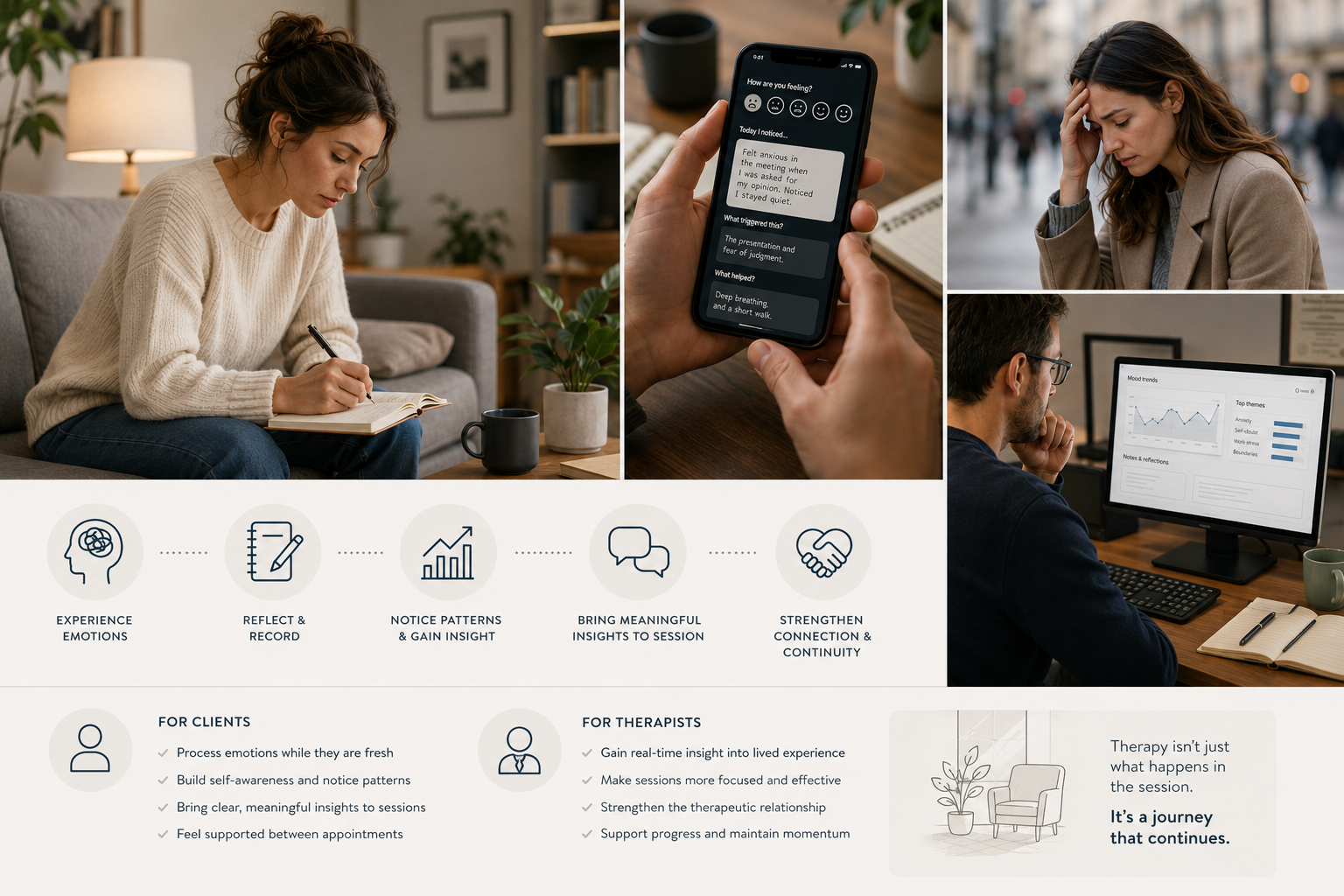
Therapy can uncover powerful emotions. That is part of the process. But emotional breakthroughs rarely arrive at convenient times.
A client may leave a session feeling optimistic, only to encounter stress, self doubt or anxiety two days later. Without a way to stay connected to the therapeutic journey, those moments can feel overwhelming and isolating.
This is why structured between session communication matters.
For clients, it provides continuity. A secure way to record thoughts, emotions or reflections can help people process experiences while they are fresh. Instead of arriving at the next session saying, “I know I felt something important but I cannot remember what it was,” clients can bring meaningful insights directly into the conversation.
This also encourages greater self awareness. Clients begin to notice patterns in mood, behaviour and emotional triggers throughout the week, not just during therapy itself.
For therapists, these insights are invaluable.
Rather than relying entirely on retrospective discussion, therapists gain a more accurate picture of the client’s lived experience. This can make sessions more focused, productive and emotionally relevant.
Maintaining appropriate contact between sessions can also strengthen the therapeutic relationship itself. Clients often feel reassured knowing the process continues beyond the weekly appointment. That sense of connection can increase trust, engagement and commitment to therapy.
Therapy is not about creating dependency. It is about creating continuity, understanding and momentum.